
what is nectar?
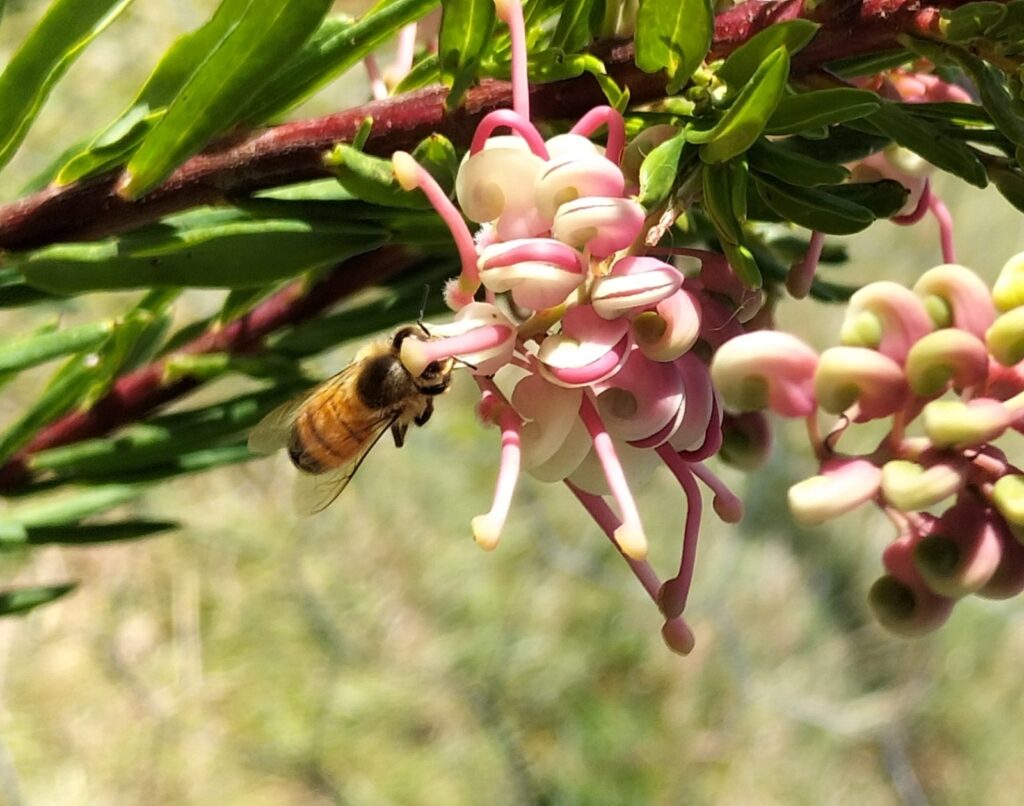
In short, nectar is the sugary liquid produced by flowers and secreted from the plants nectaries, however in reality there is more to it than just that.
Nectar is produced by plants to entice pollinators such as honey bees to visit flowers and inadvertently transfer pollen from one flower to another, pollinating the plant in the process, allowing for plant reproduction.
European honey bees are particularly good at this, as they tend to forage the same plant type rather than jumping from one species of plant to the next, allowing for even pollination.
As far as bees are concerned, nectar is the main ingredient for making honey to store as a food source for the colony.
Nectar provides the essential carbohydrates and energy for adult bees. Without it the bees would not be able go about their duties, such as foraging which ultimately maintains a strong healthy hive with sufficient resources to continue a functioning and prosperous colony.
Whilst nectar forms a vital partnership between honey bees and plants, equally also for the bee keeper. The understanding of nectar production, secretion and flows are just as vital for us too.
when do plants produce nectar?
Most flowering plant’s production of nectar will coincide with warm weather, and will tend produce more nectar at optimal intermediate temperatures of typically between 16–25°C.
On the other hand, both very cool and extreme heat conditions can reduce nectar production and volume.
Moderately warm temperatures can increase nectar secretion, while excessive heat often decreases nectar and can increase its sugar concentration due to evaporation.
This leads to situation where nectar production peaks at moderate temperatures and declines at extremes. In Canberra these ideal warmer temperatures are usually experienced late September – early April.
Whilst moderate rain is beneficial for plant growth and subsequent nectar production, heavy or prolonged rainfall can hinder bees from foraging by making nectar less attractive and difficult to access, leading to lower honey production.
During the 2022 – 2023 season, Canberra experienced one of its wettest summers on record. A total of 96 out of 272 days or 35% of the season it rained, leading to a nectar shortage with many beekeepers around the region reporting little to no honey in their hives.
See the chart at the bottom of the article for a summary the wet days and rain fall in in Canberra for 2022 – 2023 season which lead to a no honey season.
Rain can have a negative impact on a nectar flow by washing it out of flowers. This dilutes the flowers sugar content, and potentially reducing the overall nectar volume produced by the plant.
alternative nectar
There will be times when there is no nectar available, and potentially continue for some time, however bee keepers can feed their bees with sugar syrup during these crucial periods to get the bees through his time.
By supplement feeding with one part white sugar and one part water (1:1) during the warmer months simulating a flow, or thicker 2 parts white sugar to one part water (2:1) as winter approaches.
This is by no means an alternative way for mass honey production, and should not be used for anything other than ensuring the colonies health and survival.
For more information on feeding bees, please read through our notes on feeding bees.
Season 2022 – 2023
The chart below is based on mid to late August, coinciding with wattle and other pollen becoming available, then the spring and summer flows ending in February, right through to the end of April when the hives are packed down for the winter.
The data was recorded at Carwoola, however the totals are somewhat similar to Canberra Airports figures for the same period.
The 2022-2023 season was a particularly difficult season where the Canberra region experienced a very wet summer, and very little people reported any honey.
Feeding was critical throughout the season to ensure the bees survived, as the bees were simply unable to access pollen from the various wattle and eucalyptus dives during the early build up stages, This went on to have massive ramifications for the season especially when other eucalyptus also failed to flower.
The chart indicates the recorded rainfall for each day in each month of the season, and takes into consideration any nectar washout. I personally observed the bees were less active and less interested in visiting flowers for the day after rain, as they were the second day after rain.
| Day | AUG 2022 | SEP 2022 | OCT 2022 | NOV 2022 | DEC 2022 | JAN 2023 | FEB 2023 | MAR 2023 | APR 2023 |
|---|---|---|---|---|---|---|---|---|---|
| 1 | |||||||||
| 2 | 0.5mm | 4.8mm | 4,2mm | ||||||
| 3 | 27.6mm | ||||||||
| 4 | 21.6mm | 1.8mm | |||||||
| 5 | 21.6mm | 1.8mm | 44.4mm | ||||||
| 6 | 0.3mm | 7.8mm | 50.4mm | 22.8mm | |||||
| 7 | 3mm | 6mm | 29.4mm | ||||||
| 8 | 12mm | 12mm | 3mm | 18mm | |||||
| 9 | 4.8mm | 31.8mm | 25.8mm | ||||||
| 10 | 3mm | ||||||||
| 11 | 4.8mm | 1.2mm | |||||||
| 12 | 9.6mm | 18.6mm | 3mm | ||||||
| 13 | 1.8mm | 36.6mm | 6mm | ||||||
| 14 | 1.8mm | 3mm | 9mm | 18.6mm | 16.8mm | ||||
| 15 | 6mm | 10.2mm | 1.8mm | 3mm | |||||
| 16 | 13.8mm | 13.8mm | 10.8mm | 4.8mm | |||||
| 17 | 1.8mm | 9mm | 7.8mm | ||||||
| 18 | 3mm | ||||||||
| 19 | 5.9mm | 10.8mm | |||||||
| 20 | 9mm | ||||||||
| 21 | 1.2mm | ||||||||
| 22 | 6mm | 7.8mm | 4.2mm | 3mm | 10.8mm | 3mm | |||
| 23 | 1.8mm | 46.2mm | 4.8mm | 15.6mm | 12.6mm | ||||
| 24 | 12mm | 4.8mm | 1.2mm | ||||||
| 25 | 7.8mm | 7.8mm | |||||||
| 26 | 1.8mm | 4.8mm | 9mm | 10.2mm | 1.8mm | ||||
| 27 | 13.8mm | 4.2mm | 12.6mm | 31.8mm | 46.8mm | ||||
| 28 | 3mm | 15.6mm | 3mm | 41.4mm | |||||
| 29 | 6.6mm | 1.8mm | 1.8mm | 4.8mm | – | 13.8mm | 7.8mm | ||
| 30 | 30.6mm | 21mm | – | 9mm | 12mm | ||||
| 31 | – | 9.6mm | – | 27mm | – | – | |||
| WET DAYS | 16 | 12 | 14 | 10 | 8 | 11 | 5 | 9 | 11 |
| DRY DAYS | 15 | 18 | 17 | 21 | 23 | 20 | 23 | 22 | 19 |
| WASH OUT DAYS | 7 | 3 | 4 | 7 | 6 | 6 | 3 | 3 | 6 |
| FORAGE DAYS | 8 | 15 | 13 | 14 | 17 | 14 | 20 | 19 | 13 |
| TOTAL MM | 116.4mm | 67.2mm | 136.8mm | 102mm | 95.4mm | 187.2mm | 73.2mm | 144.5mm | 125.4mm |
Total Days 272
Wet Days 96
Washout (less productive) Days 45
Total Foraging Days 131
Last Update 27 Aug 2025