
Hive sitting
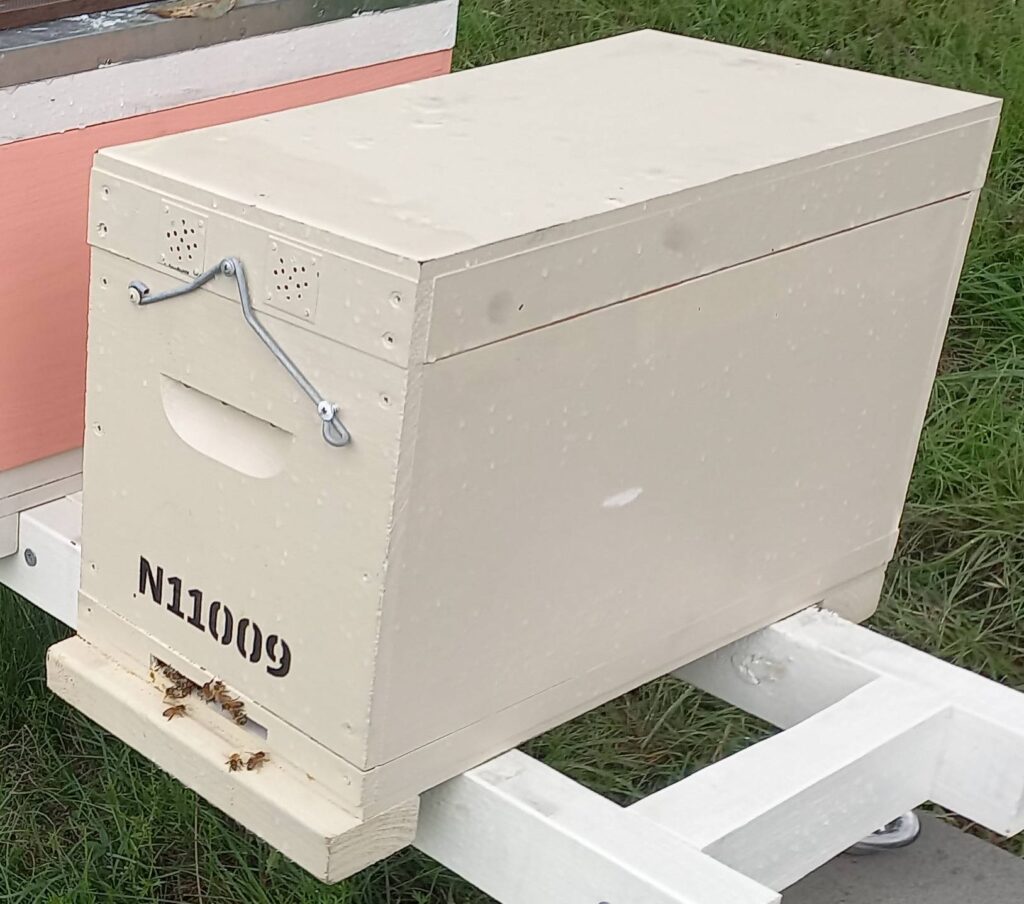
This is the ideal service for those who are going to be away from their bee hives for a period of time and would not otherwise be able to commit to their bees.
Hive Sitting involves all aspects of general hive management. Services booked during seasonal activities including Spring Management, honey flows to Dearth management, through to Winter Pack downs.
Every clients needs are different as are their hives. A first visit will be scheduled so we can both go through the hive together to ensure the hives health and viability.
We will then sit down together and discuss any potential for additional work which may be required including the addition of honey super, and the storage of honey (see honey management).
The duration the Hive Sitting may also co-inside with the need for Varroa washing, treatments or general bio-security obligations which need to be met, and these will be discussed too.
You will receive a full copy of any inspections, work or otherwise in relation to your hive(s) via email to ensure you comply with your record keeping obligations.
Basic Hive Sitting is charged based on an hourly rate, plus the additional kilometre travel fee which is outlined in Rates found on the top menu, or by clicking here.
Any additional work or equipment and treatments will be discussed case by case before hand.
— brain storming ideas —
Bio-security & obligations
Spring Management
Winter Pack Downs
Supplement Feeding
Scheduled Treatments
Varroa Management & Treatments
Brood inspections
Honey Management
Full Transparency – Photos of any issues, ie pest or disease via email.
Hive Sitting
Bio-Security & Legal Obligations
Bush Capital Beekeeping can help you ensure your legal obligations as a
beekeeper under the Honey Bee Bio-Security Code of Practice are fully met.
All beekeepers are required by law to carry out at least 2 inspections
per year (at a minimum of 4 consecutive calendar months apart).
Should a bio-security concern be present, we will liaise and discuss the
options and legal obligations with you to ensure you and your beekeeping
activities stay above the law.
Provide a through brood inspection.
Look for brood diseases including notifiable AFB and EFB.
Provide records of inspection.
Varroa inspection / wash.
Handle any notifications as required by law.
FAQ
Q. What if you find Varroa in my hive?
If Varroa is discovered in your hive, a mite count will be provided.
Depending on the season and the mite load, this can determine the action
taken. Discussions will then take place as to the treatment options
available, and the costs involved. For more information on Varroa Mite
please visit www.varroa.org.au
Q. What if you discover AFB (American Foul Brood)?
No one wants to find AFB in their hives and can be quite devastating for
the bees and you on a personal scale. AFB is a notifiable brood disease
and must be reported to the DPI in NSW or ACT Bio-security in the ACT.
Bees will need to be euthanised, and equipment will need to be destroyed
(fire) or sent to Sydney for irradiation. Irradiation is a cost
effective solution especially for Flow Hives.
Q. If you do find AFB, what happens with the honey?
A. AFB spore’s will remain present in the honey, and any honey will need
to be removed from the hive prior to equipment destruction or
irradiation. The honey will still be fit for human consumption, however
should under no circumstances come into contact, or be fed back to bees.
Spores remain viable for 90 + Years!
Q. What if EFB (European Foul Brood) is detected.
A. EFB is treatable
with the use of Oxytetracycline (OTC) is an antibiotic prescription
animal remedy. It is the only treatment approved by the Australian
Pesticides and Veterinary Medicines. We can help you down this path.
Q. What if you find any other pests or diseases?
A. Depending on what
may have been found will determine if it is notifiable, or manageable.
Diseases such as Nosema can be corrected by moving to a sunnier
position, and feeding 1:1 sugar syrup. Small Hive Beetle can be managed
in a number of ways including natural solutions and or chemical options.
Q. If there is an issue with my hive, how will I know?
We will take photos and provide you with an email report advising the
issue, along with any corrective options available. All associated
costs for additional work will be transparent before hand. With the
exception of both our legal obligations as a beekeepers, all decisions
about your bees will be made by you.
Q. My hive has Varroa, and I am managing it. What treatments and wash
method do you use?
A. If you already have a Varroa or wider, working
Integrated Pest Management system in place, we will continue with your
methods. If you use Alcohol washes, then we will also.
Q. What If any other bio-security issue rears it head during a Hive Sitting?
You are in good hands. Prior to taking on a Hive Sitting job, I will
meet with you at your hive to discuss the options. A quick hive and
health check will be performed along side you to ensure any corrective
action that may be required before your departure is handled.
Honey Management (Hive Sitting)
Should management of honey boxes or flow frames require attention, we
can move to take the most appropriate action based on the flow, your
timing and your bees requirements.
We will normally discuss this topic before your departure so we both
have a clear understanding before hand of what is required dependent on
your hive type.
Adding a super is usually the best plan of action.
Flow Hives may be a little time consuming to extract during a visit,
taking anywhere from 20 minutes to two hours per frame. In a strong flow
it might be more cost effective to add another box with standard frames
to take advantage of some honeycomb.
Depending on your circumstances, we can remove and freeze frames for you
if you have the appropriate freezer space available, such as a chest
freezer located in a garage.
Add a honey super.
Remove a honey crop.
Freeze and store frames.
Clearing flow frames for winter.
Q. What if I need to have a super (honey box) and frames added to my hive?
A. Your wishes will be discussed before hand. If you decide to go with a
box and frames, then these will be charged out at the costs shown on the
online shop. All pricing is transparent. If they are not needed, then
there is no charge for these.
Q. I have a chest freezer in my garage.
Can you put my frames in the freezer?
A. Certainly, however frames will
need to be added to the hive in place of the ones being stored. If you
have existing spare frames we can use these, or we can supply at the
prices based on the website.
Q. Do you extract my honey for me?
A. No. We do not perform any honey
extractions. Alternative arrangements will need to be made.
Q. What do you mean by clearing flow frames for winter?
If you will be away during the winter pack down, we will need to remove
and store your flow frames and box. Hopefully there is only a little bit
of honey left, and not a full crop (we can deal with this if it is). To
remove any remaining honey, we will introduce a specialised piece of
equipment which will encourage the bees to move honey down to the brood
box for their winter stores.
Spring Management & Winter Pack Downs
If your are way from your hives for either of these two critical
seasonal milestones, then this can be done for you.
If your hive has over wintered in two boxes, then they might need to be
switched around. The queen can be located and placed in the bottom box,
and a queen excluder between.
Conversely, hives can be packed down and readied for winter ensuring
sufficient food resources are available, and any honey supers which are
not required can be removed along with queen excluders, and the front
entrance reduced.Discover Our Journey So Far
Supplementary feeding of pollen substitute and or sugar syrup can be
also done depending on the season and hive requirements.