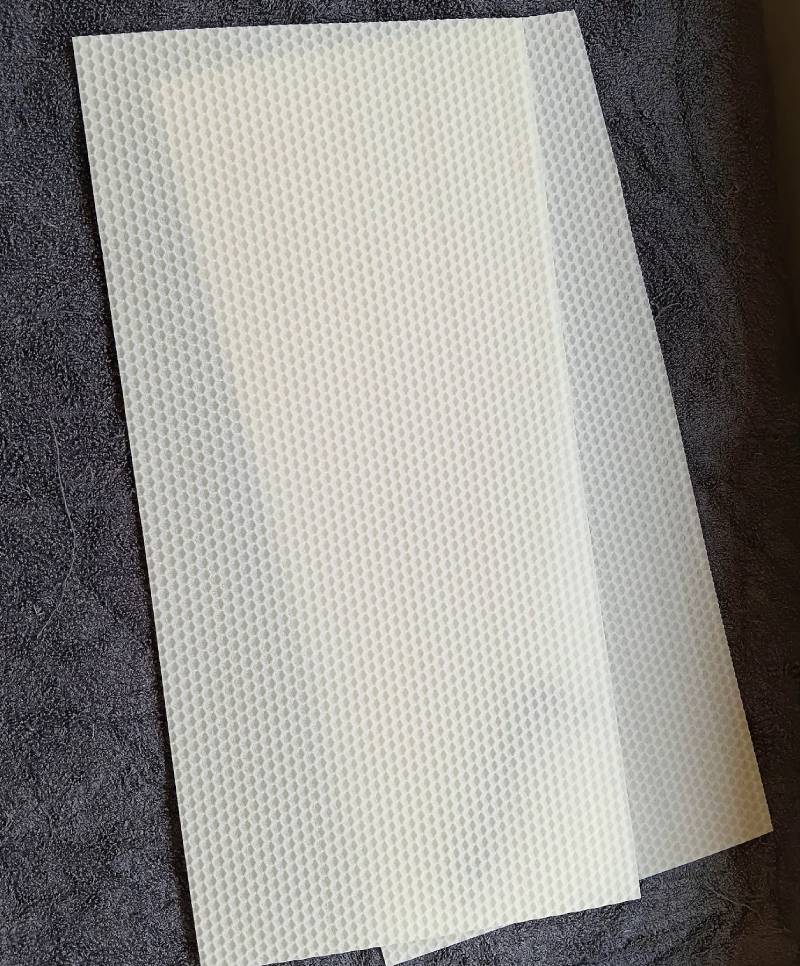
Honey Bees to start building out comb on.
As the name suggests, foundation is simply the foundations to provide the bees with a head start, something to build on rather starting from scratch, saving the bees precious time and resources.
Using foundation also provides some assurances that the bees will build out perfect uniformed frames, which is particularly handy when you plan on being a neat and tidy beekeeper.
There are realistically two of types of foundations out there. Natural bees wax, or plastic. These can be obtained in many sheet sizes suitable for use in Full Depth, Manley and Ideal boxes.
In the case of plastic, it can be offered as sheeting for insertion into wooden frames, or as a complete one piece plastic frame.
From the get go, natural bees wax is certainly the most natural material, however plastic also has its place especially in the Canberra region as we will discuss further down.
With natural wax foundation, the bees are also able to add to it, repair it, chew it and move It, unlike plastic.
Wax is a natural product produced by bees, and they will readily take to and build upon providing they have the necessary resources and vigour.
Wax Full Depth foundation can also be trimmed down to fit the smaller sized frames, and the remaining wax used as a ‘starter’ strip within other frames or mini mating nucs, so nothing is wasted.
In a cooler climate such as experienced in Canberra and region, producing delicious boxed honeycomb or chunk honey can be challenging.
By using wax foundation in an Ideal super rather than a Full Depth super is a leg up for our bees due to the shorter seasons experienced in the region and will allow for them to make the most of a nectar flow.
They are not as likely to complete 10 Full Depth frames of capped honey, however in a good season and a strong flow, use a second Ideal super once the first has been fully filled and capped.
Wax can also be quite expensive per sheet, and you will want to make sure you are using Australian sourced wax especially if you plan on consuming in the form of honeycomb or chunk honey, however compared to the shelf cost of these two products, and I believe the value out weights the original investment.
Plastic as an alternative may seem less environmentally or bee friendly, however plastic provides a low cost reusable alternative, and fully moulded plastic frames can be advantageous for a number of reasons.
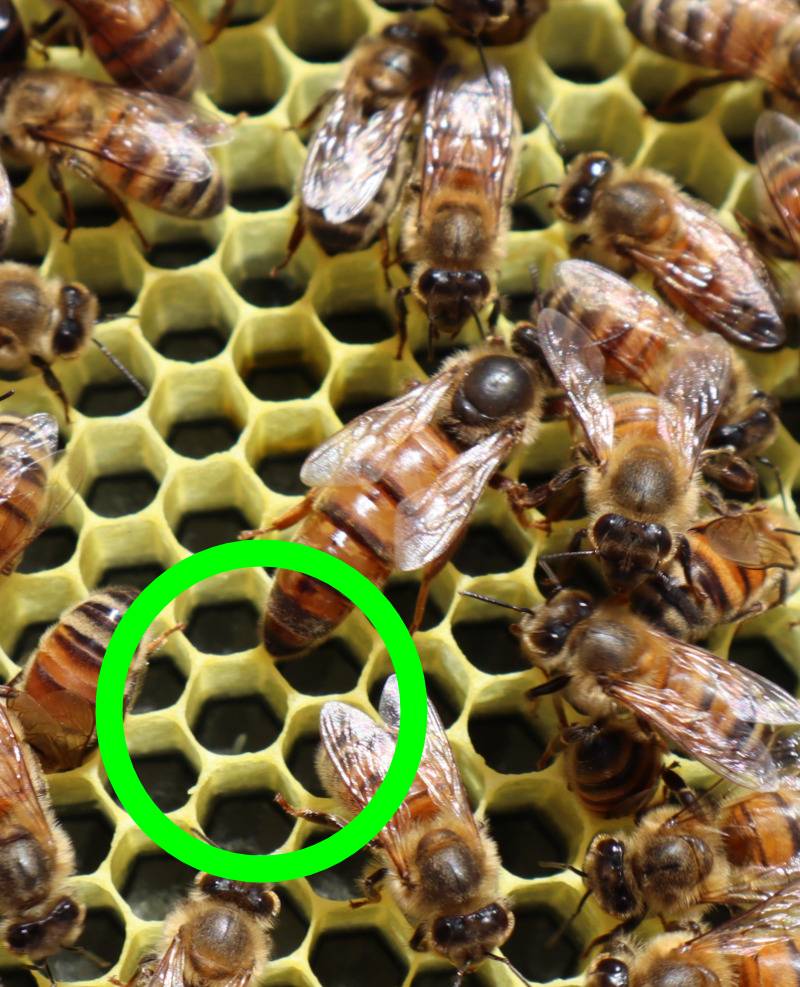
The first reason I would recommend the use of plastic is in the case of a new bee keeper who is learning the trade. It is much easier to see white eggs on the black background provided by the plastic foundation when performing a brood box inspection. This may also be true for the older bee keeper who’s eyes are just not what they used to be.
Plastic frames are also reusable for many seasons more than wood, less maintenance and not prone to complete destruction by Wax Moth, and some designs are less likely to harbour Small Hive Beetle.
On the topic of pests and pest management, green or pink moulded plastic boards are also available with a slightly larger honeycomb foundation to encourage drone raising. Using these frames as part of your Integrated Pest Management (IPM) as a mechanical control for Varroa mite reduction could be employed.
They can be pulled, frozen to kill mite loads or thrown to the chooks for cleaning up before placing back into the hive.
This said, by far the biggest reason to have some plastic frames within your operation with the Canberra region is to take advantage of two summertime florals which grow natively in the area. Both Kunzea ericoides (white tea-tree / Kānuka), and Leptospermum Spinosa, (Jelly Bush) are extremely dense honeys, which have the ability to crystallise quickly.
Placing frames of these honeys into your spinner may cause wax foundation or even free built comb to ‘blow out’ into chunks of thick honeycomb pieces, making it extremely difficult to extract without resorting to the crush and drain method.
Placing plastic frames placed within your honey supers at the correct time to allow the capture of nectar from these two florals will be beneficial in your endeavours to extract, unless you do not plan to spin!
With any luck your frames and built out comb will survive the process,and can be returned promptly to the bees as stickies for cleaning up.
Always acquire plastic moulded frames made in either Australia or New Zealand. This quality assurance ensures the plastic used is BPA free (Food Safe) and compliant with Food Standards Australia and New Zealand. It can also be recycled.
If you see the benefits of plastic being supportive within your beekeeping but would like to minimise the cost, or plastic use within your hives, then plastic foundation sheet might be the answer you are after.
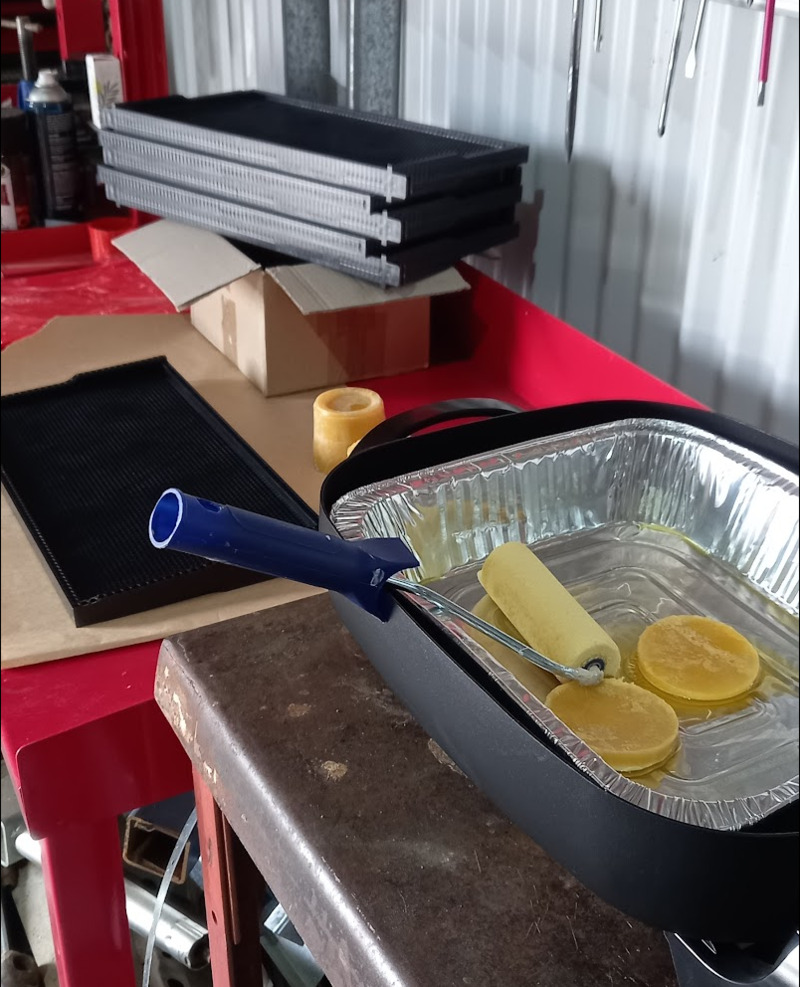
Plastic foundation can be easily inserted into a wooden frame providing the frame has a groove in the top and bottom bar to securely hold the sheet, meaning there will be no need to wire a embed the plastic foundation.
Unless purchased pre-waxed, it is important to provide a good even coat of melted wax to a brand new plastic foundation, otherwise bees may be reluctant to start using them, or ignore them completely.
I found this out the hard way during my first season of using them. During a particularly wet humid summer season, I added a number of plastic frames marketed as Small Hive Beetle (SHB) resistant, to overcome the tendencies of beetles laying eggs within the honey frames.
Even though they were waxed from the factory, the bees refused to fully build out or use the frames, with me declaring I was going to stick with traditional frames.
That winter after some thought, I went ahead and purchased unwaxed frames and waxed them myself for the upcoming season, with a subsequent greater uptake by the bees.
I now use a mixture of wooden frames, and plastic for certain flows, however with Varroa treatments, I am mindful to ensure frames that may have been in a brood box during a treatment do not find their way into honey super frames.
This requires good record keeping and procedural changes which in turn creates and enforces good beekeeping practices.
Last Update 25 Aug 2025